 Kinyarwanda
 English














African Leaders Demand 20% of Global Renewable Energy Investment
African leaders reaffirmed their commitment to scaling up renewable energy and calling for stronger international cooperation to achieve a just transition away from fossil fuels.
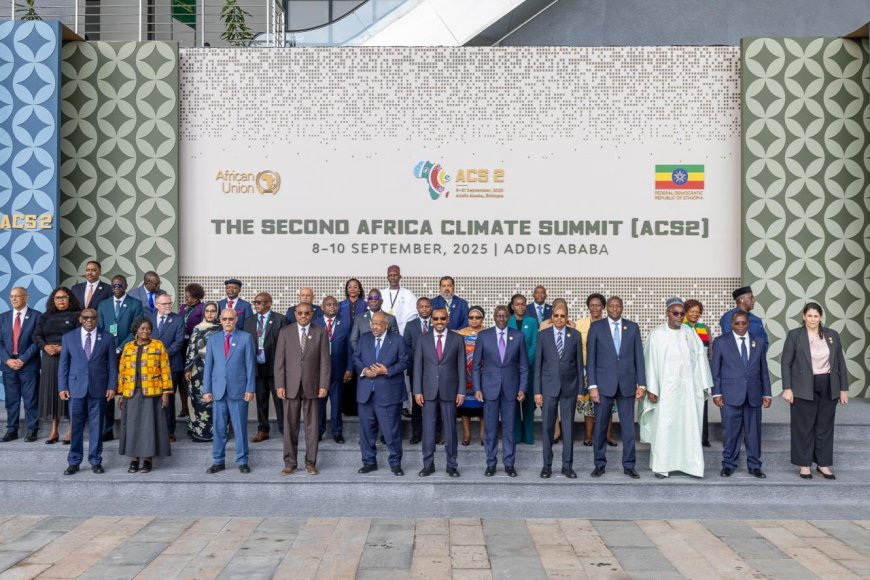
They pledged to boost Africa’s renewable energy capacity to 300 GW by 2030 and urged that the continent’s share of global renewable energy investment rise from 2% to 20% to secure a fair and sustainable energy transition, during the second Africa Climate Summit (ACS2) closed on Wednesday.
The official outcome, the Addis Declaration, urged developed nations to fulfil climate finance commitments for adaptation and mitigation while pushing for reforms to make international finance fair, accessible, and non-debt creating. Leaders also emphasized the need for grants rather than loans to avoid worsening Africa’s debt burden.
Seble Samuel, Head of Campaigns at the Fossil Fuel Non-Proliferation Treaty Initiative, warned that Africa’s renewable ambitions risk being undermined by “inadequate financing, an unjust global financial system, and so-called transitional fuels.”
Omar Elmawi, Convener of the Africa Movement of Movements, said the summit would be remembered as the moment Africa put adaptation at the center of its climate agenda, but criticized the inclusion of “transitional fuels,” which could open the door to new gas projects.
Leaders also demanded at least $1.3 trillion in climate finance by 2035, though concerns remain that such delayed delivery may come too late for communities already suffering the impacts of the climate crisis.
Momentum for the proposed Fossil Fuel Treaty is growing globally. And the African nations now have a crucial opportunity to join and shape it. It ensures saccess to finance, technology, and cooperation needed for a just, renewable-powered future.