 Kinyarwanda
 English













Rwanda Demands Stronger Global Commitments to Close Climate Finance Gap
Rwanda has called for urgent reforms in climate financing mechanisms to ensure fairness, adequacy, accessibility, and affordability, with a strong emphasis on grants rather than loans. It warned that Africa can not continue to shoulder the rising debt burden caused by climate shocks.
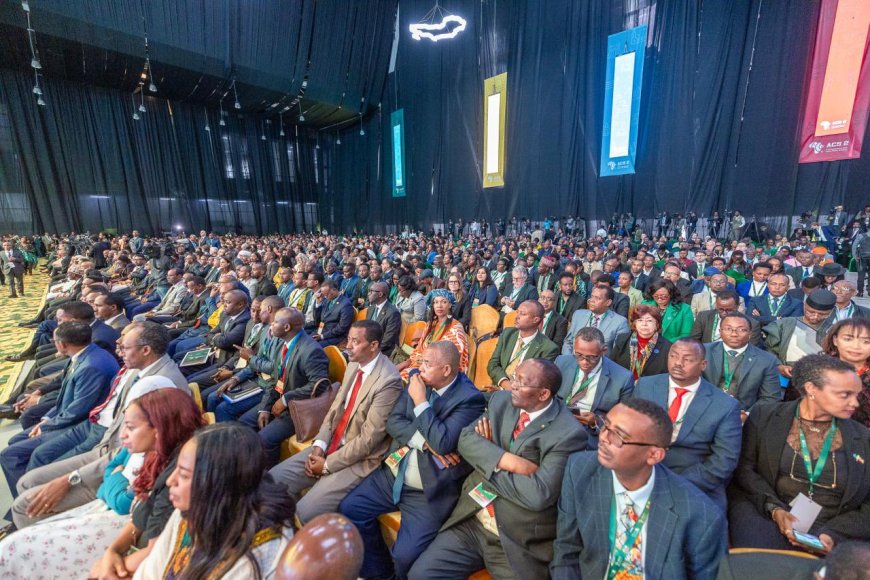
Speaking at the Second African Climate Summit in Addis Ababa under the theme “Driving Green Growth and Climate Finance Solutions for Africa and the World,” Rwanda’s Minister of Environment, Dr. Arakwiye Bernadette, described the summit as a defining moment for Africa, showing that the continent is not only raising its voice on the urgency of climate change, but also putting forward solutions that can shape a sustainable future.
“We come together not simply as those most affected, but as leaders of a new development pathway—one that is green, inclusive, and resilient,” she said.

Minister Dr Arakwiye stressed that while Africa contributes less than 4% of global emissions, it spends more than 5% of its GDP to respond to climate shocks, often at the expense of rising debt.
She underlined that Rwanda has put climate resilience at the heart of its development agenda, with the draft NDC 3.0 aligning with Vision 2050 for a resilient, carbon-neutral economy.
However, she acknowledged that challenges remain. "Ambition is constrained by limited resources. The global climate finance system too often shifts benchmarks and access requirements, leaving those on the frontlines struggling to secure the support they need. This undermines trust and takes us farther from our shared climate goals", she said.
To address this, Rwanda has already pioneered innovative tools such as the Green Fund, Ireme Invest, and the Rwanda Green Taxonomy to mobilize capital, but she emphasized that no country can close the gap alone.

Africa, as a solution provider, also holds immense potential in renewable energy, sustainable agriculture, biodiversity, and carbon markets.
"Therefore, we can power our own transformation and contribute solutions for the world," she added.
Looking ahead to COP30 in Belém, she called for stronger international commitments and timely, equitable disbursement of resources to support adaptation, resilience, and sustainable development.
She concluded by urging partners to treat financing Africa’s climate priorities not as charity but as an investment in the world’s shared future.