 Kinyarwanda
 English
















Sustainable Cooling Could Save $43 Trillion and Protect 3 Billion people from Heat
As heatwaves surge and global cooling demand skyrockets, a new UN Environment Programme (UNEP) report warns that inaction could double emissions by 2050, but adopting low-energy, passive, and hybrid cooling could reduce greenhouse gases, save trillions, and protect billions from deadly heat.
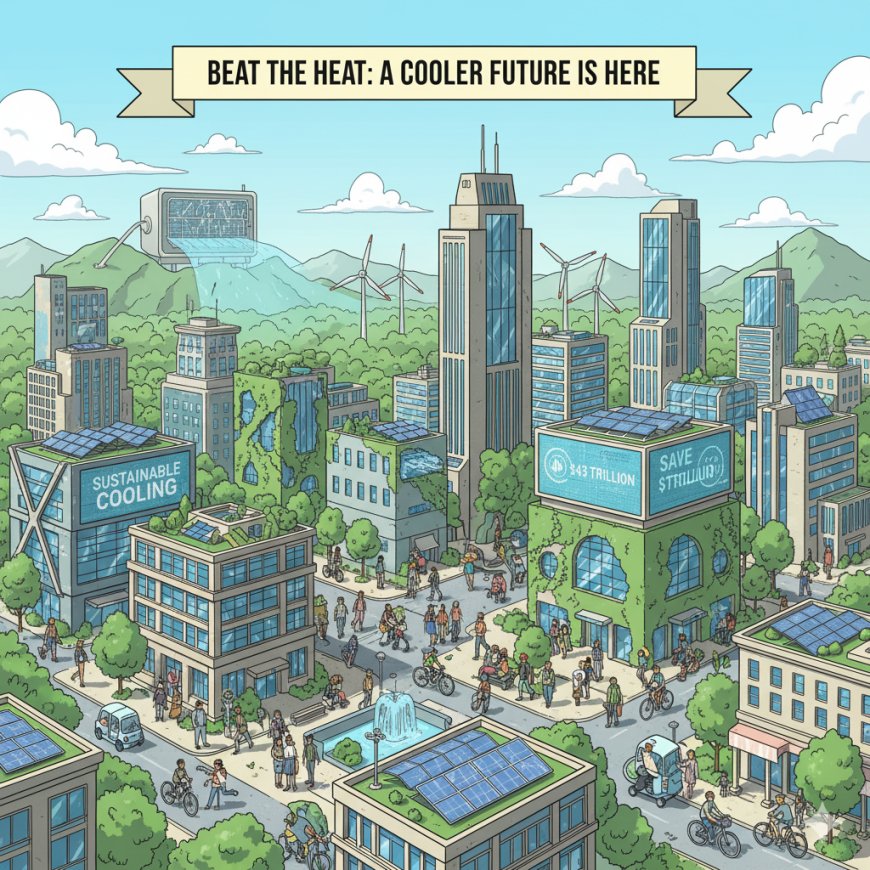
Surging heatwaves and rising demand for cooling risk doubling global greenhouse gas emissions from air conditioning by 2050, the UNEP warns. Global Cooling Watch 2025, launched at COP30 in Bresil, shows that without action, cooling demand could triple, overwhelming power grids and pushing emissions to 7.2 billion tons of CO2 equivalent.
The report proposes a Sustainable Cooling Pathway, combining passive cooling strategies, low-energy and hybrid systems, high-efficiency equipment, and rapid phase down of hydrofluorocarbons (HFCs). This approach could reduce emissions by 64%, secure 3 billion people, and save up to US$43 trillion in avoided electricity and infrastructure costs by 2050.
“As extreme heat becomes more frequent, cooling must be treated as essential infrastructure alongside water, energy, and sanitation,” said UNEP Executive Director Inger Andersen.
“We cannot air-condition our way out of the crisis; energy-efficient, nature-based solutions are vital to protect people, food systems, and economies,” he added.
The Beat the Heat initiative, led by UNEP and Brazil’s COP30 presidency, brings together 185 cities and 72 Global Cooling Pledge signatories, from Singapore and Paris to Fortaleza and Somali cities, to share expertise, implement policies, and expand equitable access to sustainable cooling.
While 72 nations have committed emission reductions, only 54 have comprehensive cooling policies covering passive design, efficiency standards, and refrigerant transition. The largest gaps remain in Africa and the Asia-Pacific, where cooling demand is expected to surge. UNEP calls for proactive, multi-level governance and prioritization of passive and nature-based solutions to reduce heat risks and grid stress.