 Kinyarwanda
 English













Rwanda Advances Education for Sustainable Development to Drive Climate Action
Rwandan teachers are spearheading projects that integrate environmental sustainability into education, equipping students with practical skills, improving nutrition, and fostering community development.
By focusing efforts on Teacher Training Colleges (TTCs), the UNESCO and UNICEF-backed Leadership for Education for Sustainable Development program ( implementrd by Krnyatta University) ensures that sustainable practices taught to future teachers will reach generations of students, strengthening Rwanda’s contribution to the 2030 Sustainable Development Goals.
Teachers Driving Green Initiatives
At TTC Zaza, teacher Irarora Gildas explained that educators in the Change Project receive training through an e-learning platform and implement practical projects. One key initiative involves planting Avoka fruit trees on four hectares of school land, which will provide nutritious fruits for students while instilling environmental responsibility.
“This project promotes healthy nutrition and creates a culture of environmental care that students can pass on to younger peers,” said Gildas.

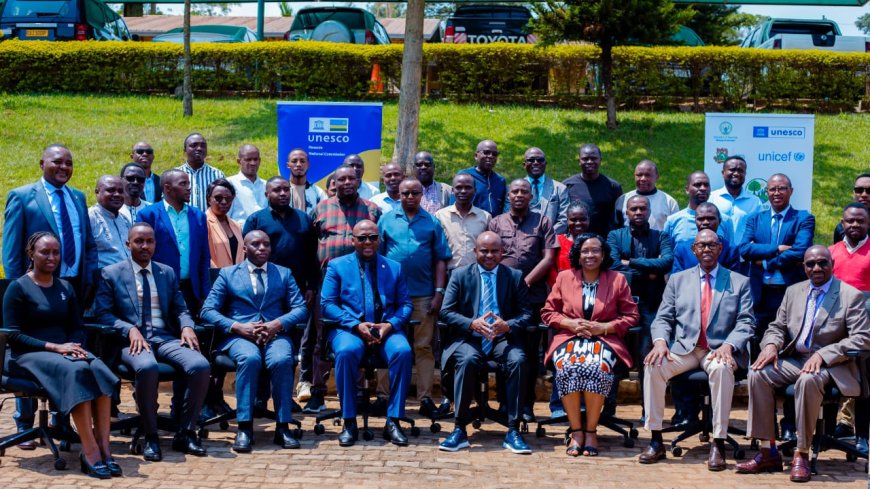
LEAD-ESD programme stakeholders during National pilicy dialogue
Nearly 1,000 students at TTC Zaza will each plant and monitor a tree, experiencing hands-on learning that links education with sustainability.
TTC Nyamata has similar projects, including tree planting, trees nursery, kitchen gardens, environmental awareness campaigns, and creating green and clean schools.
According to Teacher Claudine Musabimana, these initiatives not only improve the school environment but also teach practical skills that benefit the wider community.
Linking Education to Global Goals
During National Policy Dialogue on Thursday, 2nd October 2025, Ir. Dominique Mvunabandi, Director of the Sciences, Technology & Innovations Unit at Rwanda National Commission for UNESCO & ESD expert, highlighted that TTCs were chosen because they train the next generation of teachers who will influence thousands of students nationwide.
“By starting with teachers, we ensure sustainable knowledge reaches every child they teach,” he explained.
A standardized curriculum across Rwanda, Uganda, Kenya, and Seychelles allows top projects to compete regionally, fostering innovation and practical solutions.

Patience Awopegba, UNESCO Regional Programme Specialist for Eastern Africa, emphasized the program’s role in nurturing knowledge, skills, and values from pre-primary to university.
" 2030 is already around the corner, and we see that on all the targets, on most of the targets, we are falling short. So, how can we expedite our actions to ensure that we achieve these sustainable development goals? Education for sustainable development is that catalyst. And so to help countries to build their capacities on time, to know how to take the necessary actions, and to know the impact of every action or inaction that they make. she said.

"We do not have planet B. It's only one planet, and since there is no alternative, we have to act now. Now is the next best time for any action we have not taken in time past. And so we have to do something, and we are doing it, and we have the collaboration of all the stakeholders, of all the policy makers in all the countries that we have been to," Patience added.
Pascal Gatabazi, Technical Advisor at Rwanda’s Ministry of Education, noted that the program supports national climate and education policies, preparing future generations to lead environmental stewardship and sustainable development.