 Kinyarwanda
 English













Promoting Gender Equality Boosts Business Performance
Promoting gender equality between men and women has transformed operations and mindset at UFACO Garment, significantly boosting productivity. According to the Rwanda Standards Board (RSB), following gender equality principles align with international quality standards and help businesses access global markets more easily.
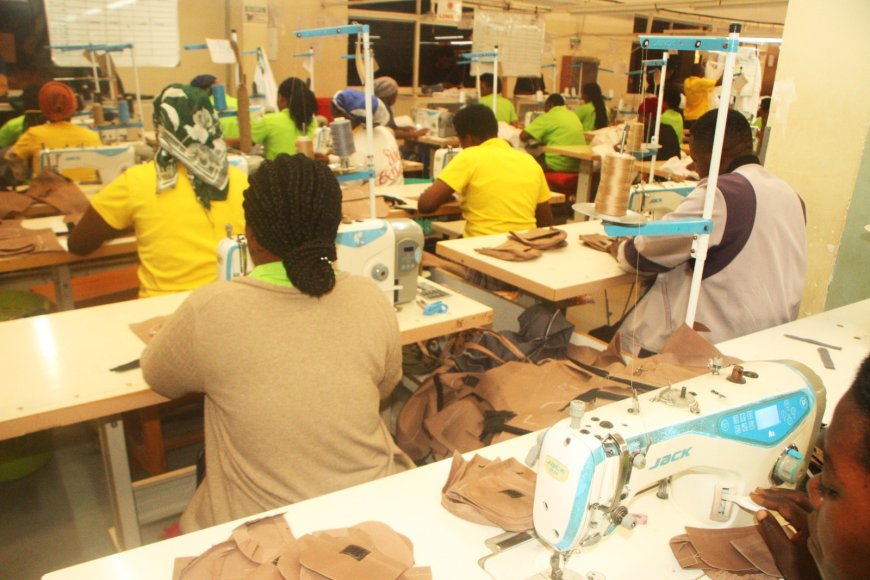
UFACO Garment began in 2018 after acquiring sewing machines, aiming to support young mothers and women with limited means by training them in tailoring and offering employment afterward. It started with 100 workers, 20 of whom remain, while others advanced to leadership roles in other factories, strengthening Rwanda’s market.
Speaking on gender equality, UFACO Managing Director Jean Isaac Ndayisenga said: “It increases productivity and changes the mindset between men and women. What a man can do, a woman can also do. It’s about teamwork—where a woman can't, a man supports her, and where a man fails, a woman helps him. This has had a great impact on our production.”

He added that production has grown tenfold. “We have reached different markets, and people appreciate what we make... it has brought change to Rwanda’s market,” Ndayisenga said. UFACO produces shirts, T-shirts, suits, school uniforms, and uniforms for the military and police, serving private companies, government institutions, and individual clients.
Regarding the Gender Equality Certification Scheme, Ndayisenga explained: “Sometimes people avoid these processes thinking they are complicated, but what matters most is willingness. We had the will, asked for information—how it is done, what is required—and we started that journey. What was required was fairness: if you have employees, numbers must be balanced; equal pay for equal work.... That’s what was required of us.”

He urged other businesses to see gender equality as a benefit, not a cost. “Some think that pursuing gender equality brings extra costs, but our experience shows the opposite. Employees understand that everyone deserves fair pay and treatment. It has changed their mindset and improved performance.”
Hadji Hakizimana, UFACO’s gender officer with seven years at the factory, said: “Here, what a man can do, a woman tries to do too—except for heavy lifting. I started young and was trained here. Now I can do many things I never imagined. There’s no gender-based violence here.”

Akingeneye Junior, a five-year employee, highlighted maternity policies: “A woman who gives birth has maternity leave, continues to receive her salary, and has time to breastfeed. She also leaves work earlier than others." She confirmed that her company really respects gender equality.
Jean Pierre Bajeneza from Rwanda Standards Board (RSB) explained that Gender Equality Certification Standard 560 follows international guidelines, assessing equality in recruitment, equal pay, training for both sides, maternity rights, and harassment prevention. Companies are scored on 40 questions: Gold (90+), Silver (75–89), Bronze (60–74).
Bajeneza said respecting gender equality improves both employee well-being and business outcomes.
“If employees are happy and protected, productivity rises. For example, in one tea factory, mothers who used to worry about their babies now work better because childcare is provided. If she harvested 10 kilograms before, she now harvests 20," He revealed.
He added that gender equality builds trust and opens markets: “When men and women have equal opportunities, treated equally that strengthen the organizations. Companies integrating gender equality into daily work develop faster and gain easier access to regional and international markets Easily.”
UFACO Garment is one of 25 companies awarded by Gender equality certification scheme. It shows that promoting gender equality is not only fair—it is a strategic advantage driving innovation, productivity, and growth.