 Kinyarwanda
 English














Landmark Agreement Signed to Harmonize Standards and Unlock Africa's Trade Potential
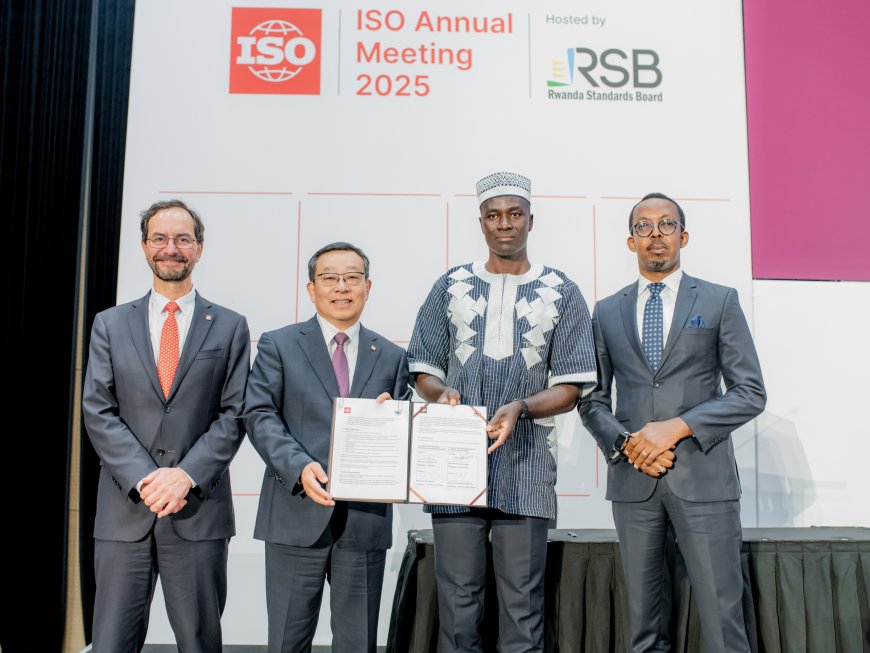
In a major step toward advancing Africa’s economic integration, the International Organization for Standardization (ISO) and the African Organisation for Standardisation (ARSO) have signed the Kigali Agreement of five years, a historic deal to strengthen technical cooperation, harmonize standards, and accelerate the implementation of the African Continental Free Trade Area (AfCFTA).
Under this agreement, ISO and ARSO will coordinate standards development, align work programmes, and promote harmonization of national and regional standards. The initiative is designed to reduce technical barriers to trade, improve product and service quality, and strengthen Africa’s industrial development.
ISO Secretary General, Sergio Mujica, described the agreement as “a milestone in our long-standing partnership with ARSO and a major opportunity to deepen ISO’s impact across Africa.”
He emphasized that the agreement goes beyond technical cooperation, aiming to build a more inclusive, connected, and sustainable future.
"Through shared standards, we can strengthen industrial development, support regulatory convergence, and empower national standards bodies to shape solutions that reflect local needs and global expectations," he highlighted.

Inspired by the Vienna Agreement between ISO and the European Committee for Standardization (CEN), the Kigali Agreement is tailored to Africa’s regulatory diversity and infrastructure realities while aligning with AfCFTA and the African Union’s Agenda 2063. It also coincides with ISO’s Action Plan for Developing Countries, reinforcing inclusivity, capacity building, and access to international standards for developing nations.
ARSO Secretary-General Dr. Hermogene Nsengimana hailed the partnership as a transformative step for Africa’s standardization landscape.
“AfCFTA’s vision of a seamless and unified continental market depends on harmonized standards. This Agreement equips ARSO and its members with the tools and framework to accelerate national and regional priorities, promoting the adoption of globally recognized benchmarks in the context of ‘One Standard–One Market’,” he said.
The Kigali Agreement is expected to unlock trade opportunities, foster industrial competitiveness, and position Africa as a stronger player in the global economy, supporting sustainable growth and regional integration
It will establish a framework to strengthen technical cooperation and accelerate the adoption and impact of international standards across Africa.
The Kigali Agreement was signed during the ISO Annual Meeting 2025, held in Kigali, Rwanda, gathered ( in person and online) global leaders, policymakers, civil society representatives, academics, and private sector actors to discuss the role of international standards in achieving sustainable development.